


Serial killer Richard Ramirez was 53 when he died of natural causes on June 7 2013 in a Marin County hospital near San Quentin State Prison, where he had been serving a life sentence on death row.
In 1989 a Los Angeles County Superior Court jury found Ramirez guilty of 13 murders and another 30 counts of attempted murder, rape, sodomy, and burglary that he had committed between 1984 and 1985 in the Los Angeles region. He had gained the "Night Stalker" nickname by breaking into people's homes at night, usually through open windows or sliding glass patio doors, before shooting them while they slept (he was also known as the "Valley-Intruder" or "Walk-in Killer" by some media at the time). He disabled telephone wires to evade detection and left various satanic symbols at his crime scenes, such as pentagrams. The brutality of his crimes shocked the courtroom when it first heard the case thirty years ago. One of his victims had her eyes gouged out, another had been beaten to death, and another had been forced to "swear by Satan" and get drawn on with lipstick before being murdered.
Ramirez was eventually caught by a mob of local residents after he tried to steal a car in East Los Angeles. The jury deliberated for 22 days in 1989 before deciding upon special circumstances that Ramirez deserved the death penalty. At the time of his death, Ramirez was one of 735 offenders on death row awaiting execution in California.
Ramirez was born on Feb 29, 1960 in El Paso, Texas, the fifth and last child of an old-fashioned and strict family that took Richard to church every Sunday. By adulthood, he described himself as "evil" in the purest sense of the word. The L.A. homicide detective who investigated the Ramirez murders described the killer as a "crack-smoking drifter", known to room in boarding houses, and sleep at bus stations and cheap hotels. Others had described the killings as carefree, senseless, and random. He beat one of his victims with a tire iron, and raped an eight-year-old boy after seeing his father being murdered. The disturbing nature of the killings took a toll on Los Angeles, as the city suffered economically for a short period of time during and after the killings; movie-theatre ticket sales fell, and alcohol sales fell as people stopped going out at night. Gun sales, however, did rise briefly.
The Ramirez case was also the inspiration behind the movie "Manhunt: Search for the Night Stalker."
Sources:
Night Stalker Richard Ramirez dies of natural causes in Marin hospital
Daily Breeze, 7 June 2013, Frank C Girardot.
Serial killer Richard Ramirez, Los Angeles’s “Night Stalker,” dies at 53; Known as the ‘Night Stalker,’ he terrorized Los Angeles with his...
Washington Post.com, 8 June 2013.
'Night Stalker' dies in US jail; AROUND THE WORLD South Wales Echo, 8 June 2013.
 David
Berkowitz was one of the most famous American serial killers of the twentieth century. Also known as the "Son of Sam" killer that confessed to
the New York murders of 6 people in the late 1970s, Berkowitz is currently
serving 6 consecutive life sentences at Sullivan Correctional Facility in New York state. After a series
of fights with fellow inmates, one of which required 65 stitches
to his throat while he was housed at Attica in 1979, Berkowitz eventually
transferred to Sullivan, where he then converted to Christianity
and began writing journal entries that are now available on his
"official" homepage at: http://www.forgivenforlife.com.
David
Berkowitz was one of the most famous American serial killers of the twentieth century. Also known as the "Son of Sam" killer that confessed to
the New York murders of 6 people in the late 1970s, Berkowitz is currently
serving 6 consecutive life sentences at Sullivan Correctional Facility in New York state. After a series
of fights with fellow inmates, one of which required 65 stitches
to his throat while he was housed at Attica in 1979, Berkowitz eventually
transferred to Sullivan, where he then converted to Christianity
and began writing journal entries that are now available on his
"official" homepage at: http://www.forgivenforlife.com.
When faced with the opportunity of parole in 2002, Berkowitz declined without hesitation. In a New York Times article he is quoted as saying, "I deserve to be in prison for the rest of my life. I can accept that." When responding to comments made by Governor Pataki concerning the governor's fight to keep Berkowitz from parole, Berkowitz noted in his prison journals, "I agree with him that I do not deserve parole, neither am I trying to obtain it." (March 1 prison journals)
Sullivan Correctional Facility is a maximum security prison for males located in Fallsburg, NY. Before his death, serial killer Arthur Shawcross also stayed at Sullivan.
 Gary
Leon Ridgway, considered America's most profilic serial killer for
confessing to the murders of 48 Seattle-area prostitutes in the
early 1980s, is serving a life sentence in Walla Walla, Washington
State, without chance of parole (9 May 2005 Associated Press
Newswires). The nickname Green River Killer reflected Ridgway's
choice of disposing the bodies in the Green River, a winding waterway
located in southeast Kings County, just east of Tacoma, Washington. He strangled
and methodically placed his victims in "clusters" near
landmarks so that he could keep a running tally of them, but because
there were so many, he eventually lost track of them.
Gary
Leon Ridgway, considered America's most profilic serial killer for
confessing to the murders of 48 Seattle-area prostitutes in the
early 1980s, is serving a life sentence in Walla Walla, Washington
State, without chance of parole (9 May 2005 Associated Press
Newswires). The nickname Green River Killer reflected Ridgway's
choice of disposing the bodies in the Green River, a winding waterway
located in southeast Kings County, just east of Tacoma, Washington. He strangled
and methodically placed his victims in "clusters" near
landmarks so that he could keep a running tally of them, but because
there were so many, he eventually lost track of them.
Walla Walla, the largest of Washington state's three maximum security facilities, has 15 armed guard towers, and is the residence of all death row inmates in the state, where most lifers begin, and end, their sentences. It is home to 2,240 inmates.
At Walla Walla, serious offenders may be housed in one of two units; either "Unit 5," the "Special Housing Unit" section of the prison that imprisons inmates on death row, those with psychiatric problems, and those requiring the services of the protective custody unit, or the Intensive Management Unit (IMU), a maximum custody facility located outside the main institution.
Ridgway is serving time here, at the IMU, a unit that houses 87 of the most dangerous and famous offenders, including those who pose a threat to themselves, others, or the operation of the prison, and many of those serving their time on Death Row. The IMU does not allow its inmates to come in contact with the rest of the institution, and separates them from the rest of the inmates by 150 yards, two fences, and razor wire coils. Inmates in the IMU mostly spend their time in idleness, reading or writing alone. Cells have only a concrete slab with a thin foam mattress, a steel sink, and a light that cannot turn off. Inmates here, unlike those elsewhere in the prison, are required to wear orange prison fatigues.
Concordant with standard "incentive levels" practice, good behaviour and clean cells may mean longer visits and more privaleges, including televisions and radios for purchase. If inmates at the IMU and on death row have proven good behaviour, they may eventually be relocated to Unit 5, which is less stringent in its restrictions, and provides allowances like tobacco products, greater possessions, more family visits, and the possibility of having a cellmate.
According to the News Tribune's research done on the inside of the facility, Walla Walla is "hard time," suffering the most seriously-sentenced inmates to a life of noise, monotony, isolation, and the constant threat of violence. According to one middle-aged killer of two serving time at the prison, if the inmate accepts the fact that he is here indefinitely and that it is the choice of the inmate how he would like to spend it, it perhaps makes the few enjoyable elements of prison life, such as "biscuits and gravy on Saturday mornings," endurable (News Tribune 20 Dec 2003).
For those that wish to make the most of life at "Wally World" by behaving properly, many opportunities exist, such as jobs in welding, baking, cleaning, stamping license plates, making lockers and office furniture out of sheet metal, or simple hobbies, such as painting models, constructing belts and wallets, or designing artwork. Inmates at the prison, including the IMU, may recieve up to 35 cents an hour or up to $55 per month in paid employment. Some jobs, such as those working in the license plate factory, can earn up to $1.10 an hour. According to the News Tribune, popular items purchased with labour earnings include Top Rame and Little Debbie Cupcakes, cassette players, televisions, Playboy and Hustler. Although victim awareness and anger management courses are still available and widely used at the prison, college education is not.
For the Green River Killer, however, many such opportunities are forbidden. According to some inmates within the prison, Ridgway would very possibly be a murder target because of his famed status, and especially since many inmates at the prison who have killed far fewer victims than Ridgway received the death penalty while Ridgway did not. With his plea bargain sentence that saved him from execution, inmates may believe the state did not serve the justice required. Indeed, there was an unsuccessful attempt within the prison to slit Ridgway's throat recently.
It is believed that Ridgway is spending the first years of his sentence confined to an 81-square-foot cell, 23 hours a day, eating alone and exercising alone. He cannot communicate with other inmates face-to-face, and he is restricted to using a speaker on his cell door. Allowed visits with immediate family will be similarly restricted by a wall of plate glass, only one or two hours a week. Besides family, other visitors might include religious leaders or social workers. Like most serial killers housed in protective custody units, Ridgway has to earn his privaleges through good behaviour, although it is doubtful that many of the opportunities open to other inmates will apply to him.
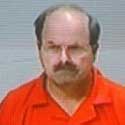 Dennis
Rader, aka BTK Killer for "bind, torture, and kill," began
serving his 10 consecutive life sentences at the maximum-security
El Dorado Correctional Facility on Friday morning, August 19, 2005.
Chained at the ankles, garbed in an orange prison jumpsuit, and
staring out the window with tears in his eyes, Rader looked upon
the prison that would, if he were assessed as being a security risk,
likely be his home for the remainder of his sentence.
Dennis
Rader, aka BTK Killer for "bind, torture, and kill," began
serving his 10 consecutive life sentences at the maximum-security
El Dorado Correctional Facility on Friday morning, August 19, 2005.
Chained at the ankles, garbed in an orange prison jumpsuit, and
staring out the window with tears in his eyes, Rader looked upon
the prison that would, if he were assessed as being a security risk,
likely be his home for the remainder of his sentence.
Rader spends his days in an 80 square-foot cell, with a foam-covered concrete bunk, one sink, a metal shelf, and a plastic trash can. He spends his one hour of free time a day, in shackles of course, in a chain-linked, outdoor, 10x10 foot pen. He is allowed three showers and five hour-long recreation periods a week. The District Attorney did everything in his power to ensure that Rader lacks access to any kind of material or medium that might help him relive his deviant fantasies, including pencils, pens, papers, news reports covering his own murders, audio or video recordings, or any inanimate article that could represent a fetish of a human or animal. It was also recommended that Rader's incoming mail be first fully censored by prison officials. Each time Rader leaves his cell it will be double-checked for any of the above-mentioned or simliar items.
There was also a recommendation of classifying Rader as a sex offender, a risky label to possess inside a prison as dangerous as El Dorado. Sex offender classification would mean Rader would receive treatment as a sex offender instead of a violent offender. There are several purposes for administering treatment to someone serving a life sentence without parole, including the expanded knowledge of the inmate's case, the reduction of prison infractions, misconduct, or violations, and the improvement of placement decisions regarding appropriate security level and determination of the kind of access to certain privaleges.
Howerer, after a year following his placement at El Dorado, Rader is behaving well enough to grant him several privaleges that violate these earlier recommendations. As of April, he is allowed television and radio access, and he can read newspapers, magazines, and books. Even though Rader used to cut out magazine advertisements of women and children to further his sexual fantasies, he is nevertheless now permitted to draw upon paper with a pencil or pen. For television, however, Rader must shell out the money to pay for it: at least $103 for a 13-inch color, or $80 for a 12-inch black-and-white if pruchased in prison. In addition, all televisions are protected with a sheath of plastic molding to prevent any prohibited materials from being stored inside, and must be listened to through a pair of headphones. Even though materials depicting sexual or erotic stimuli are not allowed, victims have argued that he would still be able to read about himself, with access to popular magazines such as Time and Newsweek, feeding his narcissistic dreams.
According to the Kansas Department of Corrections, Rader has progressed two "incentive" levels, criteria used to measure an inmate's good behaviour that have become popular in school-wide behaviour management systems. In some minimum security establishments, incentive levels, or "earning privaleges," determine the allowed amount of cash to be spent each week, the number of total personal possessions, and level of association or socialization time with other inmates (which clearly would not apply to Rader).

Paul Bernardo, likely Canada's most famous serial killer, has been serving an indefinite double-life sentence at Kingston Penitentiary since 1995 for his primary role in the torture and murder of two teenage girls in the early 1990's. His equally-famous partner in crime, Karla Homolka, was also housed in Kingston (at the recently-closed Kingston Penitentiary for Women), before being later transferred to Ste.-Annes-Des-Plaines prison and then later to Joliette Corrections Camp in Laval, QC. Like others housed in maximum and super-maximum confinement, Bernardo is only allowed outside of his small 2x3 metre cell for one hour each day.
Kingston Penitentiary is one of the oldest prisons in Canada, at 177 years old, and houses about 350 inmates currently, but it will soon be decomissioned as the Conservative government moves to more centralized units. It is assumed that Bernardo will either be transferred to one of these new complexes, or to the same prison fellow inmate Russel Williams was transferred to, at the Port-Cartier Institution in Quebec. While Millhaven and Collins Bay are fully-operational neighbouring prisons in Kingston, they likely offer no suitable custodial accommodations for the likes of high-profile dangerous offenders.
He is also forbidden to speak with the media, including a recent CBC interview that was cancelled by the warden. Although Bernardo has much he wants to say about his once fiancé sex-killer-puppet Karla Homolka, Correctional Service Canada is enforcing his silence.
Despite these restrictions, however, according to his lawyer Bernardo is exercising regularly and maintaining good health. According to the Toronto Star, Ontario Region communications officer Holly Knowles is stated as saying that allowing media access to Bernardo would "feed" his notoriety, increasing his "grandiose" and "narcissistic" desires. This decision to prohibit media involvement is directed by Bernardo's personal Offenders Correction Plan, a long-term treatment plan to which every inmate is assigned. In addition, increased media access may also encourage more animosity and instability within Kingston Penitentiary's walls among fellow Bernardo inmates, constituting a security-risk (The Toronto Star, 25 June 2005).
In February of 2006, Bernardo confessed, by correspondence through his lawyer Tony Bryant, for 10 more sexual assaults he had committed but that had been blamed on others. One of these had occurred in 1986 in Guildwood Village, where he had been living with his parents at the time, and another the same year on the University of Toronto campus at Scarbourough. In 1989 he sexually assaulted another woman outside a Kennedy Rd apartment complex near the 401. It is now also suspected that Bernardo was involved in the disappearance and death of U of T student Elizabeth Bain in 1990, a point argued by the defence of Robert Baltovich, who was convicted of the murder in 1992 (Toronto Star 21 February 2006).
A year before in June, however, a reporter from the Toronto Star, Nick Pron, had the privileged (if not illicit) opportunity to speak face-to-face with the killer in his cell. As described by Pron, Bernado's face was white, and his features "blowsy." He had gained weight, probably from working out. Their eyes at locked for a long moment, the reporter gazing up at Bernardo in his second-floor cell, before Bernardo disappeared back into the confines of his closet-sized cell. According to Pron, the cell was as close to rotting in jail as the public could hope to imagine (The Toronto Star June 21 2005 ).
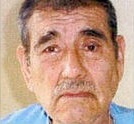
Juan Corona, who in the early 1970s slashed and hacked to death 25 farm workers before burying them in a shallow grave in a peach orchard near Yuba City, California, has had a transient history of being transferred across California's state prison system. After originally being recommended for San Quentin, which at the time had facilities for those with heart ailiments such as Corona's, Corona was committed to California Medical Facility in Vacaville in 1973, where he was later stabbed and blinded by another inmate. Corona was then transported to Correctional Training Facility in Soledad where he stayed for five years, including the period when his retrial was conducted.
In 1982 he was then transferred to Corcoran, but in 1999 suffered another attack in the prison yard. This time, three other inmates had gained access to the emergency ward that imprisoned Corcoran's most famous killers, including Charles Manson and Sirhan Sirhan, minorily injuring Corcoran and smashing Manson's guitar. According to the Associated Press (16 Mar 1999), California Corrections Department officials said that gaining entrance into the protective housing unit of the prison is a "badge of honor." Apparently, the three inmates, who had been primed in wait for the moment the protective custody unit became insecure, gained entry by taking advantage of a sensor unit malfunction that signaled a light to authorities that there was a breach of access. When authorities were alerted, a prison guard fired a round from a wood block gas gun, similar to a tear-gas rifle, to quell the disturbance.
In 2002, Corona suffered yet another attack that rendered him unconscious in his cell. He was taken to a nearby hospital and placed into intensive care under constant guard supervision. At 69, Corona is reported as sick with dementia, muttering words to himself as he paces the prison yard. Juan has been denied parole a total of six times, in part because he consistently declined to admit to his murders.
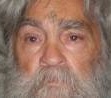
Serial-killer and cult-leader Charles Manson was responsible for the deaths of seven people in the late 1960's, and has been serving time in Corcoran's Protective Housing Unit for most of his institutional sentence. Now 77 years old, Manson has lived in the California prison system for over 65 years. To reporters and interviewers who have met with him inside prison, many are astounded at the strength of his resolve to live in such harsh conditions. His hobbies include reading, making knotted string art, in which he crafts insects and spiders out of thread he has unravelled from clothing, and playing music. Anything but a model inmate, Mason was put in protective isolation for manufacturing a weapon inside his cell, was caught twice for possession of a contraband cellphone, and has usually refused to participate in any GED or self-improvement classes. In April of 2012, the parole board sent only 20 minutes deliberating before denying Manson his 12th request for release. He must wait another 15 years before filing again.
Previously sentenced to California's Soledad Prison in 1968 for the assassination of Robert F Kennedy, Sirhan Sirhan was moved to Corcoran. The Arab fanatic murdered Kennedy, the brother of John F. Kennedy and then-likely candidate for the next presidential election, in a Los Angeles hotel kitchen, just after Kennedy had won the California Democratic presidential primary election. Sirhan Sirhan was an Arab radical who protested against president John F Kennedy's support of the Israel cause against the Arabs. He was murdered on the first day of the Six Day War in the Middle East that ultimately saw Israel deliver a crushing blow to the Arab world.
At the time, the United States had suspended the death penalty, so Sirhan Sirhan was spared and sentenced to life imprisonment. However, life imprisonment in California at the time simply meant a maximum of 13 years. Former Parole Board official James Hoover set the murderer's (assassin's) parole eligibility date at 1984, drawing widespread criticism that the US was sending a message throughout the world that the penalty for political assassination was just 13 years, a decidedly reasonable argument, if in fact Sirhan was released in 1984 instead.
Pictures of Sirhan Sirhan show him in a relaxed state of mood in prison, glib and seemingly unconcerned.
 Serial killer Arthur Shawcross was 63 when he died at Albany Medical Center outside of Sullivan Correctional Facility in 2008, where he had been serving a 250-year sentence for the strangulation of 11 women in the Rochester area of New York State in the late 1980's. New York's State Commission of Correction reported that Sullivan died of medical neglect, specifically, negligent and incompetent medical evaluation and treatment ("Serial Killer Victim of Medical Neglect?" United Press International, 27 Jan 2010). Before his death, he was refused wheelchair access for an injured leg, and was transferred to hospital in a prison van rather than an ambulance, delaying his medical treatment for longer than was allegedly necessary. Shawcross' 13-week trial included many gruesome details of mutilation and cannibalism that he engaged in during the course of his murders. His defence pled unsuccessfully for criminal insanity.
Shawcross briefly came up in the news in 2001 when he sold a collection of 10 sketches of his own personal artwork for $540 to the public. One of them included a portrait of Princess Diana. The sale and proceeds later prompted New York's Department of Corrections to ban the sale of inmate artwork.

Although he hasn't received as much media attention as other famous Canadian inmates, such as Paul Bernardo and Robert Pickton, Michael Wayne McGray is nevertheless well known in Canada for the serial-murder of 17 people throughout the 1980s. Officially, he was found responsible for the death of 7 people, all of whom he stabbed to death, in the provinces of New Brunswick and Quebec in 1985, 1987, 1998, and 1999, as well as his most recent murder of his cellmate at Mountain Institution in November of 2010. Two of these stabbings were hate-motivated killings, targeting homosexual men. He was given 6 concurrent life sentences and was incarcerated in maximum segregation at Kent Institution in Agassiz, B.C.
McGray is a self-described sociopath, and has professed that he enjoys killing, arguing that the "physical release" of killing satisfies a primitive sort of "hunger" inside him. He also suggested on numerous occassions that he was just as dangerous a man inside prison as he was outside of prison.
After confessing to the murder of his cellmate in 2011, it was clear that McGray's threats should have been taken more seriously. The murder occurred shortly after correctional authorities decided to transfer McGray out of his maximum-segregation cell at Kent to the neighboring medium-security facility Mountain Institution, late in 2010. The transfer shocked his fellow inmates in segregation at Kent, since McGray's reputation was of a "stone-cold" killer with no remorse, who preferred to live on his own in a single-bunk cell. Shortly after moving to Mountain, McGray's new cellmate was found blindfolded, gagged, bound around the ankles with torn sheets, and strangled to death (Sharing a cell with a killer; Serial murderer said he could kill again, National Post, 3 December 2010). When asked for his testimony of the killing at the trial, McGray said that he "didn't have problem with Jeremy," that he "didn't know the guy. It is what it is, it's just another sentence to me" (Serial killer details murder of cellmate, The Province, 30 October 2012, Vancouver Province). The victim, Jeremy Phillips, had been nearing the end of his 6-year sentence for aggravated assault.
On Sept. 6, 1995, John Wartley Richardson, friend of Ottawa, Ontario Ace Crew leader Mark Williams, was released from Millhaven on a 30 month conviction for street pimping. For years, Richardson had been involved in Ottawa's street sex and narcotic trades. He had a history of violence on the street as well as a history of negative behaviour in prison that ended him up often in Millhaven's segregation unit. Millhaven's segregation unit is only one of two units in Canada (the other one is in Kingston Penitentiary) that have the security to hold high-profile criminals, such as Paul Bernardo, who was originally considered for Millhaven's segregation unit after his guilty verdict in 1995, that same year.
Richardson ignored his parole and in 1996 committed first-degree murder against Sylvian Leduc, the cousin of one of the teenage girls used for sexual solicitation and drug-running. After Leduc reportedly offended the Ace Crew, calling them "niggers," Richardson became gospel for the Ace Crew and convinced that the only way they were going to demonstrate a "street-presence" and gang territoriality was to induce fear, and that this could be achieved by fatal retaliation against the offending Leduc.
Richardson was sentenced to life in prison without parole for 25 years, with an additional 73 years tacked onto his term for prior convictions. (Schmalleger & Volk 2005, Canadian Criminology Today)

At twelve minutes past midnight on March 9th of 1981, Stephen Judy, murderer of four, was executed in the electric chair. In 1979, Judy tricked a 21-year old woman into thinking her car was running on a flat tire and got her to pull over onto the gravel shoulder of the Indianapolis interstate. After secretly disabling her car's ignition wire, he convinced the family to ride along with him to the nearest service station to get their car fixed. Instead, he drove them to a secluded area and murdered them (1981, Mar 9 NYT). The bodies were later discovered by mushroom hunters in a creek (NYT Feb 18 1981).
The four murders quickly became known as the "flat-tire murders" in the news media, and it was soon learned that Judy had been on parole during the time of the murders. Investigation also revealed a history of assault charges that included raping and stabbing a woman with a hatchet when he was only 13 years old.

In 1933, John Dillinger made his first bank heist after just being paroled from Indiana State Prison, beginning what was then known as the "Midwest Crime Wave" of the 1930s. The New Carlisle National Bank at the corner of Main and Jefferson streets surrendered $10,000 to Dillinger and 2 other men, just one of the countless banks Dillinger and his mob robbed during the 1930's across Indiana, Illinois, Florida, and Wisconsin. Dillinger escaped from two jails in his lifetime, one of which was from the Crown Point Jail in Indiana, on January 22 in 1934, where he landed after being arrested at the Hotel Congress in Tuscon, Arizona. Dillinger served time in Indiana State Penitentiary from 1924 to 1933 after being sentenced for 25 years for multiple counts of armed robbery. After being paroled in May of 1933, he spent the next (and last) 13 months of his life boozing, whoring, smuggling, robbing, and going to the movies as much as possible. His $75,000 bank heist in Greencastle, Indiana was considered one of the largest in US history. He was eventually gunned down by FBI special agent Melvin Purvis in July 1934 outside the Biograph Theatre near Lincoln Park in Chicago (Now the "Victory Gardens Biograph Theatre").
Dubbed widely as an "American Folk Hero", Dillinger's popularity may have stemmed from the punishment he had inflicted on America's large banks, which were perhaps icons of the nation's financial suffering during the peak of the Great Depression. The banks at that time were seen as responsible for many of the foreclosures and property seizures that were ruining families' livelihoods. Dillinger, himself, grew up a farm boy in Indiana, so he probably shared the public's lack of sympathy for the financial sector, as well. It was at this time, after a string of crime waves, including the likes of not only John Dillinger, but also Bonne & Clyde, Pretty Boy Floyd, Machine Gun Kelly, and Ma Barker, that J. Edgar Hoover decided to consolidate the power of his law enforcement unit with the Bureau of Investigation (BOI) into a national police force (the FBI) capable of pursuing criminals across state lines.
SourcesDead or alive: a Canadian gangster's mystery; Johnny Depp is bringing bad boy John Dillinger back to life, Ed Butts, The Globe and Mail, 2 August 2008.
Midwest hopes for 'Public Enemies' tourism, Associated Press Newswires, 20:56, 29 April 2009.
Film & Music: Film: reviews: Smooth criminal: Playing the dashing, charismatic bank robber John Dillinger was never going to be a stretch, The Guardian, 3 July 2009, Peter Bradshaw.
"Mafia boss John Gotti, who was sentenced to life in prison for murder and racketeering in 1993, was flown to USP Marion by US Marshals in a privately owned jet. While not considered an escape risk, it was believed that he had the resources to organise an escape while inside. He was placed in the prison's east quarter, and classified as "general population," allowing him to exercise once a day for 1 hour and 45 minutes, and to socialize with other inmates twice a week during 3-hour recreation times in the prison gym or the outside yard.
While staying at Marion in July 1996, John Gotti enlisted the help of Aryan Brotherhood members after he was attacked by an inmate. The Aryan members notified their "Federal Commission" of the hit and sent a memo out of the prison, which eventually reached the west coast in September of 1997.
On June 2nd, 1930, Bob H White was ushered into Nevada State Prison's gas chamber with a smile on his face. In 1928 White murdered a fellow gambler at Elko, Nevada. His heart stopped just 9 minutes after the cyanide pellets were dropped into the jar of sulfuric acid and water. The Warden of Nevada State Prison later claimed that Nevada's execution method was the quickest, the most painless, and the most humane method ever designed (New York Times Jun 3 1930).
A little more than a year later in September of 1931 there occurred another execution, this time for 28-year old Luis Ceja, murderer of a Chinese merchant in Winnemuca, Nevada in 1930. It took over 14 minutes for Ceja's heart to stop beating under the stethoscope of a medical doctor (NYT Sep 5 1931).
A more famous execution in Nevada's history took place on October 22, 1979, the first such execution of the state's last 18 years, this time again by lethal injection. Jesse Walter Bishop, a drug-addict and self-described armed robber, was sentenced to die for a murder committed the preceding year, however after his death investigators disclosed an additional 18 murders-for-hire Bishop had confessed to. The original murder took place the night of December 20 1977, when Bishop attempted to hold up a casino employee at gunpoint. When it at first failed, a struggle ensued, and Bishop shot the employee in the stomach before shooting another man in the back who had come to help. After two subsequent armed robberies on the run, Bishop was finally captured in Boulder City.

On December 6, 1985, Carroll Edward Cole was executed by lethal injection after confessing to killing 13 people. Allegedly out of cold revenge against his abusive mother who forced Cole to conceal her affairs from his father, Cole strangled to death three women in Dallas, Texas, killed two women in Las Vegas, Nevada, and confessed to killing fourteen more. Many of his victims he met after periods of heavy drinking in bars.
Cole acknowledged that he had an urge to kill, and unsuccessfully sought psychiatric health. Before he was killed he gave medical examiners permission to study his brain for any physiological abnormalities that might be attributed to his primal emotions (NYT Dec 7 1985).
In 1989, 52-year old killer William Paul Thompson was put to death by lethal injection for the murders of one drifter in Reno, Nevada, who "got in his way," and two brothers in Auburn, California, because they were drug-informers. He later confessed to three other killings, including a murder-for-hire of an Oklahamo prosecutor, and two other ones he decided not to identify (New York Times, June 20, 1989).
That same year, Sean Patrick Flanagan was sentenced to die for the Las Vegas murders of two homosexuals. Flanagan's first victim, a middle-aged chef who had befriended Flanagan after losing his money on gambling, was strangled and dismembered. Four days later Flanagan strangled a 59-year old pianist after he offered Flanagan a ride. Frustrated with his own sexuality, Flanagan claimed that he could not determine the sole cause for his motivation to kill, but speculated that it might involve his perception that murdering homosexuals would be "doing some good." It took the cyanide eight minutes to stop Flanagan's heart from beating (NYT June 24 1989).
The following year in June, Thomas Baal was killed for robbing and stabbing to death a female airport bus driver in Las Vegas, allegedly for "only giving him $20" during the robbery (NYT Jun 4 1990).
Salvatorre Merra was put to death by electric chair on August 5 1927 for murdering, with the help of his nephew Salvatore Ranelli, paymaster Thomas Conway in a car-barn in Newark, New Jersey. Hoping to interrupt the execution process with the help of his lawyer, Merra denied his convictions to the bitter end, claiming he was always innocent. His argument in the case was that the jury had separated the verdict of both Merra and Ranelli with a comma instead of a semicolon, meaning that they both should have received the same sentence instead of Ranelli serving life and Merra serving execution (New York Times, August 6 1927).
